NVIDIA Vera Rubin vs AMD Helios: The AI Chip Battle Reshaping AI Factories in 2026
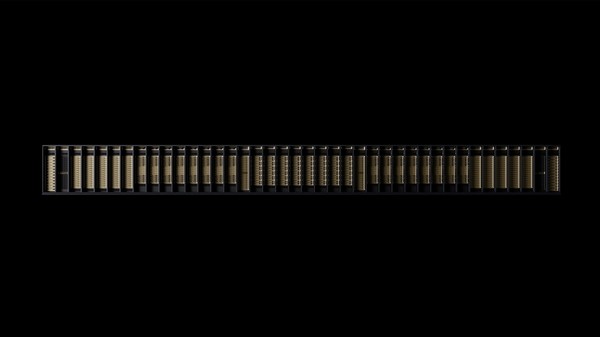
The battle for the future of AI compute has shifted from individual chips to entire racks. On August 24, 2026, at Hot Chips 2026, NVIDIA unveiled the Vera Rubin NVL72 — a full rack-scale AI system that succeeds the Grace Blackwell platform. Just weeks earlier, at Advancing AI 2026, AMD officially launched Helios, its own first production rack-scale system, packing 72 MI455X GPUs into a single 4OU chassis. Both platforms represent a fundamental restructuring of how AI compute is designed, sold, and deployed: the rack is now the unit of compute, not the server [1] [2].
For AI researchers — including those of us working on computer vision and pedestrian detection — these are not abstract corporate announcements. The chips and systems announced in August 2026 will define how quickly we can train the next generation of vision models, how efficiently we can deploy them at the edge, and how much compute budget is available for academic research. This article examines both platforms in depth, compares their architectures and ecosystems, and explores what the rack-scale shift means for AI research in Morocco and beyond.
| Value | Metric |
|---|---|
| 2.9 EF | Helios peak FP4 per rack |
| 288 GB | Rubin GPU HBM4 memory |
| 3,400 | Tokens/sec Groq 3 LPX Gemma 4 31B |
| $6.7B | AMD Q2 2026 data center revenue |
| 512K | GPUs in NVIDIA Spectrum-X scale |
| +15% | NVIDIA price increase on AI servers |
NVIDIA Vera Rubin: Full-Stack Dominance, Refined
NVIDIA's Vera Rubin platform, presented at Hot Chips 2026, is the company's most aggressive iteration of its vertically integrated AI compute strategy. The Vera Rubin NVL72 is now in full production, and its specifications make clear that NVIDIA views the rack — not the GPU — as the atomic unit of AI compute [1].
Rubin GPU: HBM4 and Adaptive Sparsity
The Rubin GPU is the heart of the platform. It features HBM4 memory with up to 288 GB per package, a significant increase over the HBM3e used in Blackwell. But raw capacity is only part of the story. NVIDIA has introduced adaptive sparsity with a 2:4 format specifically optimized for attention and MLP layers — the computational bottlenecks of transformer-based models. In practical terms, this means the Rubin GPU can skip up to half the computations in these layers without accuracy loss, effectively doubling throughput on sparsity-friendly workloads [3].
The interconnect story is equally important. NVLink 6 delivers 3.6 TB/s per GPU, enabling the 72 GPUs in a Vera Rubin NVL72 rack to function as a single unified memory pool. NVIDIA also introduced counted-write sync, a mechanism to reduce GPU-to-GPU latency — a critical bottleneck in large-scale distributed training where synchronization overhead can consume a significant fraction of total compute time [3].
Groq 3 LPX: Low-Latency Inference at Scale
Perhaps the most unexpected announcement was the Groq 3 LPX, a low-latency inference accelerator codesigned with the Vera Rubin NVL72. The LPX achieves 3,400 output tokens per second on Gemma 4 31B at 100K context — a figure that redefines what is possible in real-time inference for large models. This is not a standalone product; it is designed to sit within the NVLink fabric, enabling training and inference workloads to share the same rack infrastructure [1].
Nebius is the first cloud provider to offer Groq 3 LPX instances, signaling that NVIDIA intends this accelerator to be broadly accessible through cloud partnerships rather than restricted to its largest hyperscale customers.
NVLink Fusion and Spectrum-X: Opening the Ecosystem
In a strategic move, NVIDIA announced NVLink Fusion, which allows custom XPUs and CPUs from other vendors to connect into NVIDIA's AI infrastructure platform. This is a departure from NVIDIA's historically closed ecosystem and appears to be a direct response to AMD's open-standards approach with UALink. NVLink Fusion means that customers who have invested in non-NVIDIA accelerators can still leverage NVIDIA's networking and system software stack [1].
On the networking side, Spectrum-X Multiplane enables AI factories to scale to 512,000 GPUs without adding a third network tier, delivering 1.6x better networking performance than standard Ethernet. This is critical for training frontier models that require tens of thousands of GPUs working in concert. CoreWeave is deploying Spectrum-X Multiplane, and SpaceXAI is using Vera CPUs for agentic AI workloads [1].
Power, Cooling, and RAS
The Vera Rubin NVL72 is designed for data center pragmatism. It supports 45°C inlet liquid cooling, 800 VDC power, and intelligent power smoothing that NVIDIA claims enables up to 40% more GPUs per provisioned watt. The system uses cable-free, hot-swappable trays for maintenance, and includes a second-generation RIST engine for zero-downtime GPU health checks — a critical feature for systems that must run uninterrupted training jobs lasting weeks [3].
Price Pressure: RAMageddon
However, NVIDIA's platform comes with rising costs. The company has reportedly warned its largest customers of 15%+ price increases on Grace Blackwell and Vera Rubin server systems, driven by soaring memory costs — a phenomenon some have termed "RAMageddon." HBM4 memory is a scarce commodity, and both NVIDIA and AMD are competing for limited supply from Samsung, SK Hynix, and Micron. This price pressure is significant for academic and institutional buyers who lack the negotiating leverage of hyperscale cloud providers [4].
AMD Helios: Open Standards, Competitive Performance
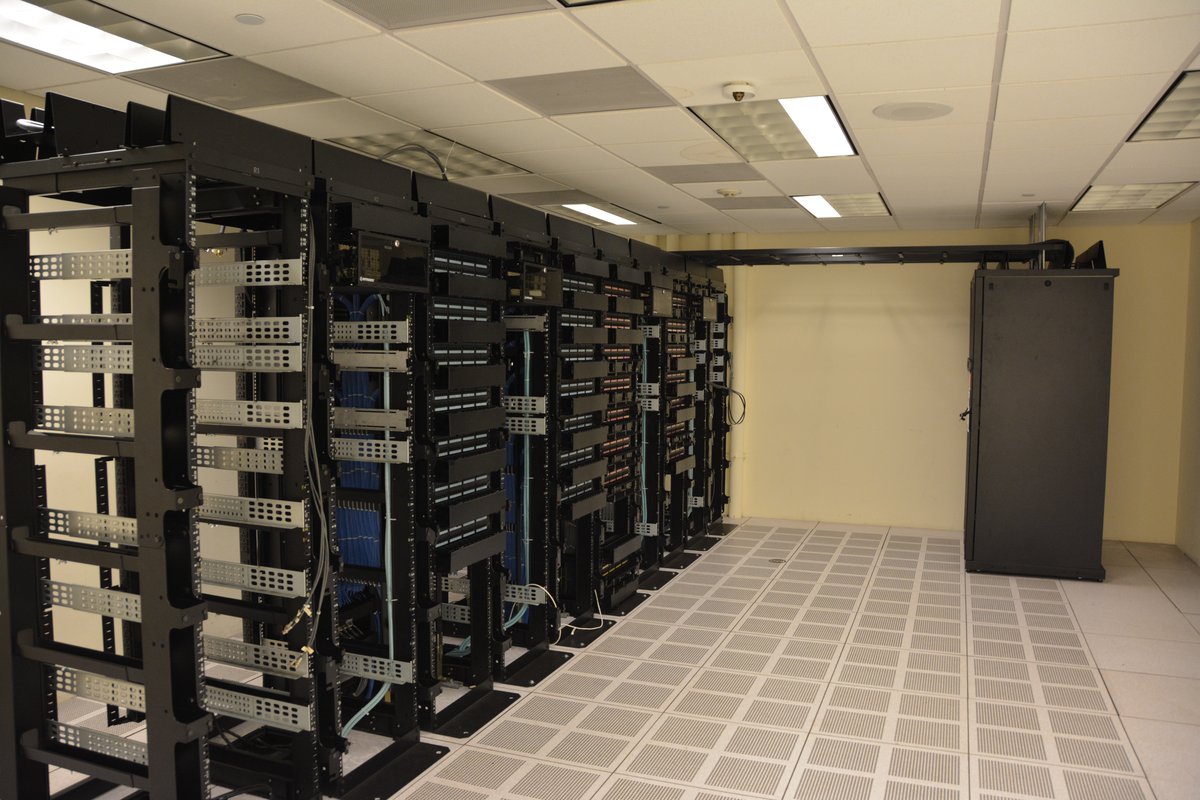
AMD's response to NVIDIA's rack-scale strategy is Helios, officially launched at Advancing AI 2026. Where NVIDIA doubles down on proprietary integration, AMD bets on open standards — and the specifications suggest this bet is competitively credible [2].
MI455X and CDNA 5: The GPU Inside
The Instinct MI455X GPU, built on the CDNA 5 architecture, is Helios' compute engine. With HBM4 memory and a total of 31 TB across the 72-GPU rack, AMD claims a 50% HBM capacity advantage over the Vera Rubin NVL72. Memory bandwidth reaches 1.7 PB/s per rack, which AMD asserts is 6% higher than its NVIDIA counterpart. At the compute level, Helios delivers 2.9 exaflops peak FP4 and 1.4 exaflops peak FP8 — with AMD claiming 15% more peak FP4 than Vera Rubin [5].
These are impressive numbers, but raw peak performance tells only part of the story. Real-world training and inference throughput depend heavily on software stack maturity, interconnect efficiency, and system-level optimization — areas where NVIDIA's CUDA ecosystem has historically held a commanding lead.
UALink and Open-Standards Networking
Helios' most consequential architectural decision is its use of UALink and Ethernet-based open-standards networking via Pensando Vulcano 800 AI NICs, rather than NVIDIA's proprietary NVLink. AMD claims 50% more scale-out bandwidth than Vera Rubin's NVLink 6, and up to 30% more tokens per dollar — a metric that directly measures inference cost efficiency [5].
The open-standards approach has strategic implications. UALink is an industry consortium standard, meaning that other chipmakers, system builders, and cloud providers can build compatible hardware without licensing NVIDIA's proprietary interconnect. For organizations that value vendor flexibility and want to avoid lock-in to a single supplier, this is a significant advantage. However, open standards also mean that AMD must compete on the quality of its software stack, system integration, and ecosystem maturity — areas where NVIDIA's years of investment in CUDA and its developer tools remain a formidable moat.
System Design and Production Readiness
The Helios system integrates 72 MI455X GPUs, 6th-generation EPYC "Venice" CPUs, and Pensando Vulcano 800 AI NICs into a single 4OU Open Rack Wide (ORW) chassis. It uses direct liquid cooling with a 50VDC busbar, and weighs approximately 5,000 lbs per rack — a physical density that requires specialized data center infrastructure. AMD reports that Helios is in production now, with shipments expected by end of Q3 2026 [2].
Major Customer Commitments
AMD's customer roster for Helios is its strongest signal of competitive viability. Microsoft Azure is deploying Helios for frontier-model inference. OpenAI has signed a multi-generation agreement for up to 6 GW of AMD compute. Anthropic is deploying up to 2 GW of MI450-series GPUs starting in H1 2027. Meta is validating Helios alongside EPYC 9006 processors. Even Cerebras, the wafer-scale AI chip company, is pairing its systems with Helios [5].
These are not trial deployments — they represent multi-gigawatt, multi-year commitments from the world's largest AI companies. AMD's Q2 2026 data center revenue of $6.7 billion (up 107% year-over-year) confirms that this is a company executing at scale, not merely making promises [5].
Head-to-Head: Vera Rubin NVL72 vs Helios
The following table summarizes the key architectural and commercial differences between the two platforms:
| Dimension | NVIDIA Vera Rubin | AMD Helios |
|---|---|---|
| GPUs per rack | 72 (Rubin) | 72 (MI455X) |
| Peak FP4 | ~2.5 exaflops | 2.9 exaflops |
| HBM4 per rack | ~20 TB | 31 TB |
| Interconnect | NVLink 6 (3.6 TB/s) | UALink + Ethernet |
| Inference accel. | Groq 3 LPX | Standalone GPU |
| Architecture | Proprietary full-stack | Open standards |
| Networking | Spectrum-X Multiplane | Pensando Vulcano 800 |
| Key customers | Nebius, CoreWeave, SpaceXAI | Microsoft, OpenAI (6 GW), Anthropic (2 GW) |
| Price trajectory | +15% increase | HBM-constrained |
| Tokens per $ | Baseline | +30% claimed |
Several observations emerge from this comparison. First, AMD's performance claims — 15% more FP4, 50% more HBM, 30% more tokens per dollar — are meaningful but should be understood as peak and best-case figures that may not fully translate to all real-world workloads. Second, NVIDIA's integration of the Groq 3 LPX inference accelerator gives it a unique advantage in latency-critical deployments. Third, the open vs. proprietary ecosystem question is not merely technical; it is strategic, with long-term implications for vendor lock-in, pricing power, and supply chain resilience.
The Shift to Rack-Scale AI Factories
The most important story of August 2026 is not the specifications of any individual chip. It is the structural shift from selling GPUs to selling racks. Both NVIDIA and AMD now design, manufacture, and ship complete rack-scale systems — not just accelerators that customers integrate into their own servers.
This shift has several implications:
- Interconnect is the new moat. When the rack is the compute unit, the interconnect that links the GPUs within and between racks becomes as important as the GPUs themselves. NVIDIA's NVLink 6 and Spectrum-X versus AMD's UALink and Pensando networking represent fundamentally different philosophies: proprietary integration versus open standards. The winner of this interconnect war may determine the architecture of AI infrastructure for the next decade.
- Cloud access democratizes research. As cloud providers like Nebius, CoreWeave, Microsoft Azure, and others deploy these rack-scale systems, even small research teams can access GPU-hours on the latest hardware without owning a rack. For AI researchers in Morocco and similar contexts, this means the gap between what is technically possible and what is practically accessible continues to narrow.
- Power and cooling become strategic constraints. Both platforms require direct liquid cooling, high-voltage power (800 VDC for NVIDIA, 50 VDC for AMD), and specialized data center infrastructure. The 50 MW data center planned for Morocco's Jazari ROOT institute will need to account for these requirements — and will face a genuine choice between NVIDIA's and AMD's ecosystem architectures.
- HBM scarcity is the shared bottleneck. Both platforms depend on HBM4 memory, which is produced by only three manufacturers worldwide. The 15%+ price increase NVIDIA has warned about reflects a supply constraint that affects AMD equally. This is not a competitive advantage for either company; it is an industry-wide challenge that will limit production volumes and keep prices elevated through at least 2027 [4].
NVIDIA's Scale-In: Infrastructure for Agentic AI
Beyond the GPU and interconnect announcements, NVIDIA introduced a concept that deserves attention: Scale-In, powered by BlueField-4 DPU. Scale-In is NVIDIA's framework for an accelerated infrastructure pillar that covers networking, storage, security, and observability for agentic AI factories — data centers designed not just for training and inference, but for running autonomous AI agents that interact with external systems, make decisions, and execute complex workflows [1].
Agentic AI — AI systems that plan, reason, and act autonomously — places different demands on infrastructure than batch training or single-query inference. Agents require persistent state, real-time tool use, multi-step reasoning, and secure interaction with external APIs and databases. Scale-In addresses these requirements by offloading infrastructure management tasks to the BlueField DPU, freeing GPU cycles for actual computation. For researchers building agentic computer vision systems — where an AI agent must not only detect objects but reason about scenes, make decisions, and interact with other systems — this infrastructure layer could be as important as raw GPU performance.
What This Means for AI Research and Computer Vision
The advances in the Vera Rubin and Helios platforms have direct implications for computer vision research and pedestrian detection, the core focus of my work:
- Faster training cycles: HBM4 memory and higher GPU-to-GPU bandwidth mean that training large vision models — including multi-modal models that combine visual and textual understanding — will take hours rather than days. This accelerates the experimentation cycle, enabling researchers to test more architectures, more hyperparameters, and more data augmentation strategies in the same calendar time.
- Longer context for video understanding: The massive memory capacity of both platforms (288 GB per GPU for Vera Rubin, ~431 GB per GPU implied for Helios) enables processing longer video sequences in a single context window. For pedestrian detection in video streams, this could mean analyzing minutes of footage rather than seconds, capturing behavioral patterns that unfold over time.
- Real-time inference at scale: NVIDIA's Groq 3 LPX, achieving 3,400 tokens per second on large models, suggests that real-time multi-modal inference — combining object detection, tracking, and reasoning — is becoming economically viable for edge deployment. For pedestrian detection systems that must operate in real time, this is transformative.
- Democratized access through cloud: As these platforms roll out through cloud providers, academic researchers and smaller teams gain access to compute that was previously available only to well-funded industry labs. The competition between NVIDIA and AMD for cloud deployments benefits researchers indirectly, by driving down per-GPU-hour costs and increasing availability.
Morocco's Infrastructure Choice: Jazari ROOT and the Ecosystem Decision
Morocco's Jazari ROOT institute is building a 50 MW sovereign data center to support the country's AI ambitions under the Maroc IA 2030 strategy. The choice between NVIDIA's and AMD's ecosystem — or a hybrid approach — is one of the most consequential infrastructure decisions the institute will face.
The trade-offs are clear:
- NVIDIA's ecosystem offers the most mature software stack (CUDA), the deepest integration between training and inference (with Groq 3 LPX), and the largest developer community. But it comes with proprietary lock-in, rising prices, and the risk that NVIDIA's pricing power will extract premium margins from smaller buyers.
- AMD's ecosystem offers open standards (UALink, Ethernet), competitive performance (30% more tokens per dollar claimed), and vendor flexibility. But its ROCm software stack, while rapidly improving, still lags CUDA in maturity and breadth. For a new data center building from scratch, the open-standards approach may be more future-proof — but it requires investment in software engineering talent to bridge the CUDA-to-ROCm gap.
A pragmatic approach might be a mixed deployment: NVIDIA GPUs for workloads that depend on CUDA-specific optimizations, and AMD GPUs for inference and open-standards workloads where cost efficiency matters most. The key insight is that the rack-scale shift makes this kind of heterogeneity more feasible: NVLink Fusion and UALink both support multi-vendor accelerator integration, even if they do so in fundamentally different ways.
The Road Ahead: Competition, Convergence, and Constraints
The NVIDIA-versus-AMD dynamic in August 2026 is best understood as a competition between two viable architectural philosophies, not a winner-take-all contest. NVIDIA's full-stack integration delivers the most polished experience and the fastest time-to-results for organizations that can afford its pricing. AMD's open-standards approach offers better economics and greater flexibility, but requires more engineering effort from its customers.
The real constraints on AI compute in 2026 and beyond are not GPU architecture choices — they are HBM supply, data center power, and cooling infrastructure. Both NVIDIA and AMD are competing for the same limited HBM4 supply from the same three manufacturers. Both require direct liquid cooling and high-voltage power distribution. And both are pushing toward rack-scale systems that weigh thousands of pounds and draw megawatts of power. The AI industry's growth will ultimately be bounded not by the cleverness of GPU architectures, but by the speed at which the world can build data centers, lay power lines, and manufacture memory chips.
For researchers, the practical takeaway is this: the compute available to you is about to increase dramatically, whether you access it through a cloud provider running Vera Rubin, Helios, or both. The competition between NVIDIA and AMD ensures that pricing will remain competitive, performance will continue to improve, and open standards will keep pressure on proprietary lock-in. The best strategy for academic researchers is to build models and pipelines that are portable across ecosystems — using frameworks like PyTorch that abstract away hardware-specific details — so that you can take advantage of whichever platform offers the best price-performance at any given time.
Sources & References
- NVIDIA Blog — “Vera Rubin, Groq 3 LPX, Spectrum-X & NVLink Fusion”
- DatacenterDynamics — “AMD Officially Launches Helios Rack-Scale System”
- ServeTheHome — “NVIDIA Vera Rubin NVL72 Rack at Hot Chips 2026”
- Tom's Hardware — “NVIDIA Reportedly Warns Biggest Customers of 15%+ Price Hikes on AI Servers”
- Data Center Frontier — “AMD Helios Takes AI Infrastructure Fight to Rack Scale”
Collaborate on AI and Computer Vision Research
Interested in how next-generation AI hardware affects computer vision research, pedestrian detection, or Morocco's AI infrastructure? Dr. Razzok welcomes research partnerships, academic supervision inquiries, and consulting on AI strategy.
Get in Touch →