AI Research in Morocco: Deep Learning, Computer Vision & Innovation
Morocco is emerging as a significant player in AI research across North Africa and the Middle East. With world-class engineering schools, Scopus-indexed publications, and a growing ecosystem of AI professors and researchers, the country is building a foundation for transformative innovation. This article explores the landscape of AI research in Morocco — from deep learning and computer vision to the institutions, projects, and people driving it forward.
The State of AI Research in Morocco
Over the past decade, Morocco's AI research output has grown significantly. Moroccan researchers now publish in top-tier venues on topics including:
- Deep Learning & Neural Networks: Advances in CNNs, RNNs, transformers, and generative models applied to real-world problems
- Computer Vision: Object detection, image segmentation, pedestrian tracking, and autonomous driving systems adapted for Moroccan conditions
- Natural Language Processing: Arabic and Amazigh language processing, sentiment analysis, and machine translation
- Cybersecurity & AI: Intrusion detection, threat analysis, and AI-powered security frameworks
- AI for Healthcare: Medical imaging, disease prediction, and AI-assisted diagnostics for Moroccan hospitals
The country's research strengths lie at the intersection of global AI advances and local problem-solving — creating solutions that address Moroccan and African challenges while contributing to the international scientific community.
Key AI Research Institutions in Morocco
Several institutions form the backbone of AI research in Morocco:
Faculty of Sciences and Techniques, Mohammedia (FSTM)
FSTM is one of Morocco's leading institutions for AI and computer science research. The faculty's Computer Engineering and AI department has produced numerous Scopus-indexed publications in deep learning, computer vision, and cybersecurity. It's where Dr. Mohammed Razzok completed his Ph.D. on pedestrian detection and tracking using deep learning.
ENSIAS — National School of Computer Science and Systems Analysis (Rabat)
ENSIAS is one of Morocco's leading engineering schools for computer science. Its AI research groups work on machine learning, data science, and intelligent systems, producing graduates who go on to lead AI initiatives across the country.
Faculty of Legal and Political Sciences, Settat
An emerging hub for the intersection of AI and law, this faculty is pioneering research on how artificial intelligence can assist in legal analysis, intellectual property management, and digital governance — a unique interdisciplinary approach led by AI professors like Dr. Mohammed Razzok.
OMNIA School of Business and Technology (Casablanca)
OMNIA bridges the gap between AI research and business applications, teaching courses on networks, systems, and cybersecurity that prepare students for the intersection of AI and enterprise technology.
International Collaborations
Moroccan AI researchers maintain strong international partnerships. For example, Dr. Razzok's Ph.D. co-advisor was Prof. Yassine Ruichek from UTBM (University of Technology of Belfort-Montbéliard, France), exemplifying how Moroccan AI research connects to European institutions for joint publications and knowledge exchange.
Deep Learning Research in Morocco
Deep learning is the most active AI research area in Morocco. Moroccan researchers have made notable contributions in:
Object Detection & Tracking
Using architectures like YOLOv5, Deep-SORT, and conditional GANs, Moroccan researchers are developing real-time object detection systems optimized for challenging conditions — fog, rain, low light, and occlusion. This work has direct applications in autonomous driving and traffic safety, particularly on Morocco's complex road network.
Research Highlight: Pedestrian Detection Under Weather Conditions
Dr. Mohammed Razzok's research on pedestrian detection using conditional GANs addresses a critical challenge: how to reliably detect pedestrians in adverse weather. His paper, published in the IAES International Journal of Artificial Intelligence, demonstrates how generative adversarial networks can synthesize training data for weather-robust detection — achieving significant improvements over baseline methods. Read the paper →
Generative AI & Intelligent Agents
Beyond traditional deep learning, Moroccan researchers are exploring generative AI systems that can autonomously produce scientific ideas, algorithms, and theories. The IGNIS Project, led by Dr. Razzok, is at the forefront of this research — demonstrating how AI can move from data processing to knowledge creation.
Medical & Agricultural AI
Researchers at other Moroccan institutions are also applying deep learning to medical imaging (detecting diseases from X-rays and MRIs) and agricultural monitoring (crop disease detection, yield prediction, and precision farming) — addressing challenges specific to Morocco's healthcare system and agricultural economy.
Computer Vision: From Labs to Roads
Computer vision research in Morocco has a uniquely practical orientation. Rather than purely theoretical work, Moroccan researchers focus on real-world applications:
- Pedestrian safety systems for Morocco's urban and highway environments
- Traffic monitoring and analysis using real-time video processing
- Document analysis for Arabic and Amazigh script recognition
- Satellite image analysis for urban planning and environmental monitoring
The pedestrian detection and tracking system developed by Dr. Razzok — combining YOLOv5 with Deep-SORT and novel data association metrics — represents the kind of applied computer vision research that Morocco excels at: building systems that work in real conditions, not just controlled environments. Read the paper →
AI Innovation Ecosystem in Morocco
Morocco's AI innovation ecosystem extends beyond universities:
Government Initiatives
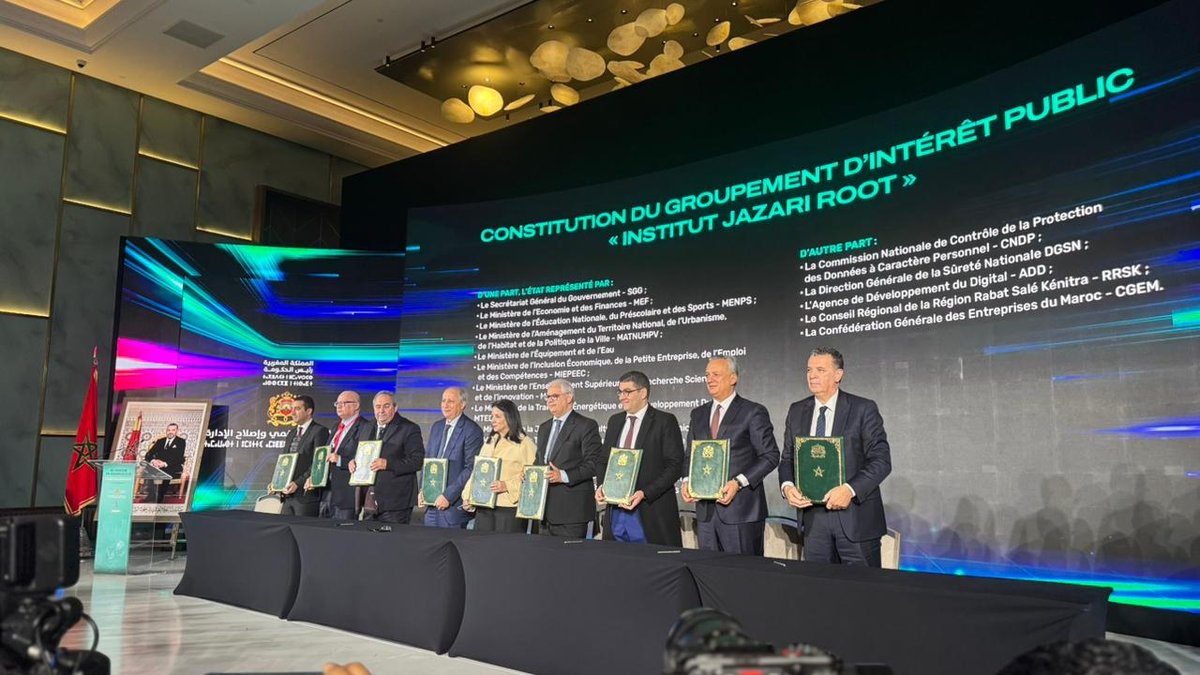
The Moroccan government has been investing in digital transformation and AI education, supporting research labs and university programs across the country. This creates an environment where AI professors and researchers can develop innovative solutions for local and global challenges.
International Partnerships
Moroccan AI researchers collaborate with institutions worldwide. For example, Dr. Razzok's Ph.D. was co-supervised by Prof. Yassine Ruichek from UTBM, France, reflecting the strong ties between Moroccan and European research institutions. Such partnerships enable joint publications, student exchanges, and shared research infrastructure.
Conferences & Workshops
Morocco hosts and participates in major AI conferences, including the International Conference on Intelligent Systems and ICRAMS (International Conference on Robotics and Automated Systems), as well as regional deep learning workshops. These events bring together AI professors, researchers, and students from across Morocco and the world.
The Role of AI Professors in Morocco's Research Ecosystem
AI professors in Morocco play a unique role that goes beyond traditional academic responsibilities:
- Mentoring the next generation: Supervising Ph.D. students and guiding research that addresses local and global challenges
- Bridging theory and practice: Translating cutting-edge research into applications for Moroccan industry and government
- Building international connections: Establishing partnerships that bring global AI expertise to Moroccan institutions
- Advising on policy: Helping shape Morocco's national AI strategy and ethical frameworks
Getting Involved in AI Research in Morocco
Whether you're a student, researcher, or professional, there are many ways to engage with AI research in Morocco:
- Academic programs: Enroll in AI-focused programs at FSTM, ENSIAS, or other Moroccan universities
- Research internships: Work with AI professors on deep learning, computer vision, and NLP projects
- Open-source contributions: Moroccan researchers increasingly publish code and datasets on GitHub
- Conferences: Attend and present at AI conferences held in Morocco and the broader region
- Collaboration: Reach out to AI professors like Dr. Mohammed Razzok for research partnerships and guidance
Want to Collaborate on AI Research?
Dr. Razzok is open to research collaborations in deep learning, computer vision, and AI innovation. Reach out to discuss partnerships, academic supervision, or consulting opportunities.
Get in Touch →