Mistral AI & Morocco: Sovereign Language Models for Darija, Amazigh & Arabic
In January 2026, Morocco took a decisive step toward digital sovereignty by announcing a landmark partnership with Mistral AI, the French AI company valued at over $6 billion. The collaboration, unveiled as part of the Maroc IA 2030 national strategy, aims to build sovereign language models that understand Arabic, Moroccan Darija, and Amazigh (Tamazight) — languages that major AI systems have long ignored. For a country where over 30 million people speak Darija daily and Amazigh is an official language, this is not just a technological milestone. It is a statement of linguistic independence.
| Value | Metric |
|---|---|
| 80+ | African languages ignored by big tech |
| 30M+ | Darija speakers worldwide |
| 660 | Government services on Idarati portal |
| Apache 2.0 | Open-source license for Darija models |
| 100K | Digital talents per year by 2030 |
The Partnership at a Glance
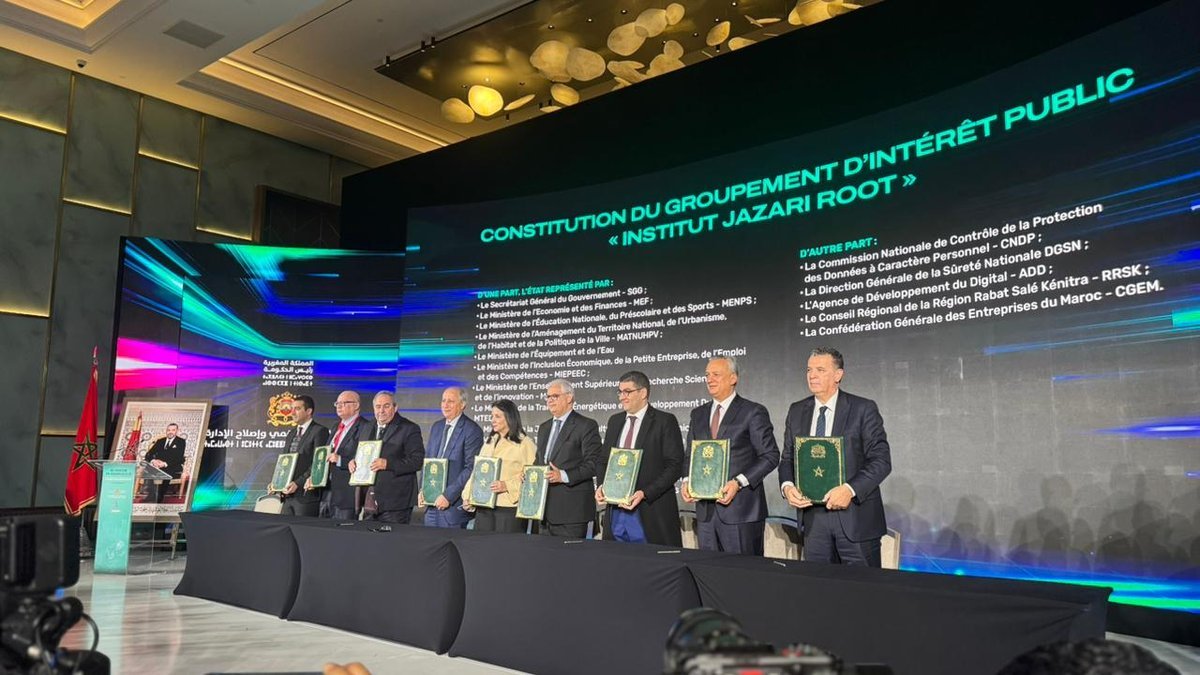
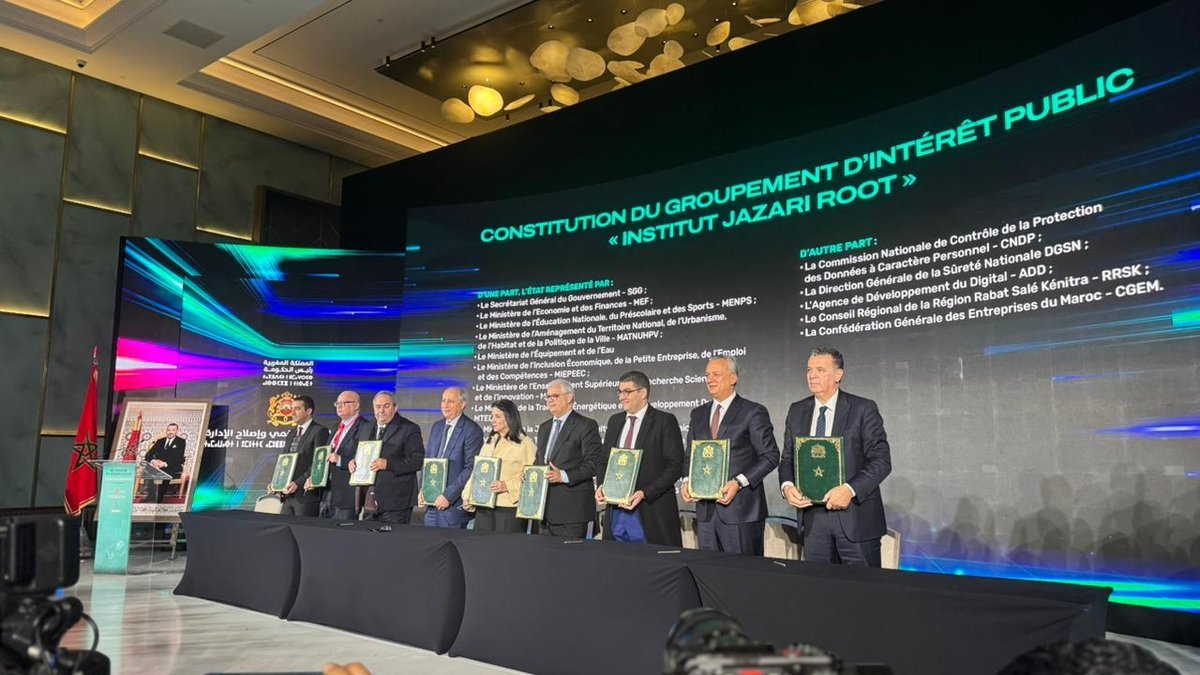
The Mistral AI & Morocco partnership centers on a joint R&D laboratory called “Mistral AI & MTNRA”, where MTNRA stands for the Ministère de la Transition Numérique et de la Réforme de l’Administration — Morocco’s Ministry of Digital Transition and Administrative Reform. The laboratory’s mandate is to develop AI language models specifically trained on Moroccan linguistic data, ensuring that the resulting systems genuinely understand the nuances of Darija, Amazigh, and Arabic as they are used in Morocco.
Mistral AI, co-founded by Arthur Mensch, brings world-class expertise in building efficient, high-performance language models. The company has made its name developing models that rival much larger competitors while remaining open and deployable on-premise — a critical requirement for Morocco’s sovereignty ambitions. The partnership ensures that the models are published under the Apache 2.0 open-source license, meaning researchers, developers, and businesses worldwide can inspect, modify, and build upon them freely (La Quotidienne).
Why Darija and Amazigh Need Their Own Models
Morocco’s linguistic landscape is rich and complex. Moroccan Darija is the Arabic dialect spoken by over 30 million people in everyday life — at home, in markets, on television, and across social media. Yet it differs substantially from Modern Standard Arabic in vocabulary, grammar, and pronunciation. Amazigh, or Tamazight, encompasses multiple distinct variants — Tashelhit, Central Tamazight, and Tarifit — each with its own oral and written traditions. Tamazight became an official language of Morocco in 2011, and the Tifinagh script is now taught in schools.
Despite this, existing large language models do not natively support Darija or Amazigh. Systems like GPT-4, Claude, and Gemini can attempt to generate Darija text, but they do so by extrapolating from Modern Standard Arabic training data — resulting in outputs riddled with errors, mixed dialects, and cultural misunderstandings. As Minister Amal El Fallah Seghrouchni put it: “A good tool is one that speaks your language” (Rest of World). For Moroccans who speak Darija or Amazigh as their primary language, this gap means that AI tools remain inaccessible, regardless of how powerful they become.
The numbers underscore the scale of the problem. Minister Seghrouchni has noted that 80 languages and dialects across Africa are effectively ignored by major technology companies (Rest of World). Morocco’s initiative with Mistral AI is, in part, an answer to that neglect — a refusal to accept that citizens should have to switch to French or English to benefit from artificial intelligence.
Minister Amal El Fallah Seghrouchni: The Architect Behind the Strategy
The driving force behind this partnership is Amal El Fallah Seghrouchni, Morocco’s Minister Delegate for Digital Transition and Administrative Reform. Appointed in October 2024, she brings a rare combination of academic depth and policy vision to the role.
Minister Seghrouchni holds a Ph.D. in computer science and has authored over 200 research papers. Before joining the government, she directed Africa’s first UNESCO center for AI, giving her deep insight into how artificial intelligence can serve — or fail to serve — the continent’s populations. She advocates for what she calls a “third voice” on AI — an approach to artificial intelligence that is distinct from the American, European, and Chinese models, one rooted in local languages, local values, and local sovereignty (African Business).
Her vision is pragmatic as well as principled. Under her leadership, Morocco’s national digital portal Idarati now hosts 660 government services, and the Maroc IA 2030 strategy sets the target of training 100,000 digital talents per year by 2030 (Rest of World). The Mistral AI partnership is not an isolated project — it is a pillar within a comprehensive strategy to make Morocco a continental leader in AI.
The “Third Voice” on AI
Minister Seghrouchni’s concept of a “third voice” is not about neutrality between the U.S. and China. It is about building AI that reflects the linguistic, cultural, and regulatory realities of Africa and the Global South. Morocco, she argues, should not simply import AI models built elsewhere. It should produce its own — models that understand Darija, respect Amazigh, and operate within Moroccan law.
Sovereign Deployment: On-Premise, Not Cloud-Dependent
A critical aspect of the partnership is sovereign deployment. The language models developed through the Mistral AI & MTNRA laboratory will be deployed on on-premise, nationally controlled infrastructure, not on foreign cloud servers. This is not merely a technical preference — it is a legal and strategic imperative.
Morocco’s data protection laws, including Law 09-08 on the protection of personal data and Law 05-20 on cybersecurity, impose strict requirements on how citizen data is processed and stored. By deploying models on Moroccan infrastructure, the government ensures full compliance with these laws and avoids the jurisdictional complications that come with routing data through foreign servers (Morocco World News).
This approach also aligns with Mistral AI’s own philosophy. Unlike many AI companies that push customers toward cloud-dependent services, Mistral has built its reputation on models that can be deployed wherever the client chooses — on local servers, in private data centers, or in sovereign clouds. For Morocco, this was a natural fit.
What the Models Will Power
The language models being developed through this partnership are not research prototypes. They are designed to power real, citizen-facing services across multiple domains:
- Chatbots and virtual assistants: Government portals and administrative services will be able to interact with citizens in Darija and Amazigh, not just French or Standard Arabic.
- Text-to-speech (TTS): Converting written Darija and Amazigh into natural-sounding speech, making digital content accessible to citizens who may not be fully literate in written forms of these languages.
- Speech-to-text (STT): Enabling voice-driven interfaces for government services, healthcare, and education — allowing Moroccans to interact with systems using spoken Darija or Amazigh.
- Administrative assistants: AI-powered tools that help citizens navigate Morocco’s 660 government services on the Idarati portal, understanding natural-language queries in Darija and providing accurate responses.
The practical impact is significant. When a citizen in a rural Amazigh-speaking village can ask a government chatbot a question in Tarifit and receive a correct answer, the promise of digital transformation becomes real rather than theoretical.
Open Source: Apache 2.0 and Why It Matters
The decision to publish the models under the Apache 2.0 license is deliberate and consequential. Apache 2.0 is one of the most permissive open-source licenses available. It allows anyone to use, modify, distribute, and even commercialize the models without requiring them to open-source their own derivative work. This means:
- Moroccan startups can build commercial products on top of these models without licensing fees or restrictive terms.
- Researchers at Moroccan and African universities can study, fine-tune, and extend the models for academic purposes.
- Other African nations can adapt the models for their own languages and dialects, advancing the continent’s AI ecosystem as a whole.
- Transparency is guaranteed — the open-source nature means the models’ training data, architecture, and behavior can be independently audited.
This stands in contrast to the proprietary models offered by large American and Chinese AI companies, where the inner workings remain opaque and deployment is tied to the provider’s cloud infrastructure (La Quotidienne).
The EU-Morocco Digital Partnership
The Mistral AI collaboration did not emerge in isolation. In April 2026, Morocco and the European Union signed a broader digital partnership that reinforces the country’s role as a bridge between Africa and Europe in the AI domain (African Business).
Key elements of this partnership include:
- Four European supercomputing centers partnering with Mohammed VI University, giving Moroccan researchers access to significant computational resources for training large models.
- The Medusa optical fiber cable, connecting North Africa to Europe and providing the high-bandwidth connectivity required for data-intensive AI workloads.
- EU interest in building an AI factory in Rabat, which would provide dedicated infrastructure for AI model training and inference at scale.
- Morocco’s formal designation as a digital hub for Africa in data science and AI, positioning the country as the entry point for European-African AI collaboration.
For the EU, Morocco represents a “gateway” to the African market and a resilient alternative to Middle Eastern data hubs. For Morocco, the partnership provides access to computational resources, expertise, and international credibility that would otherwise take years to develop independently (L’Express).
Local Teams in Casablanca and Rabat
Mistral AI is studying the establishment of local teams in Casablanca and Rabat, according to reports about the partnership (CIO-MAG). This is significant for several reasons:
- Data collection and annotation for Darija and Amazigh require native speakers who understand the cultural and linguistic context. Local teams ensure this work is done with the necessary expertise.
- Model evaluation — knowing whether a Darija response is natural or whether an Amazigh transcription is accurate — demands native-level fluency that cannot be outsourced.
- Talent development: By creating AI engineering positions in Morocco, Mistral AI contributes directly to the Maroc IA 2030 goal of training 100,000 digital talents per year.
- Sovereignty by design: Having the technical team physically located in Morocco means that the development process is subject to Moroccan law and oversight, not merely the final deployment.
The Broader Significance: Linguistic Sovereignty as Digital Sovereignty
The Mistral AI & Morocco partnership challenges a fundamental assumption in the global AI industry: that a handful of languages — English, Mandarin, Standard Arabic, French — are sufficient for AI to serve the world. They are not. Not in Morocco, and not across Africa.
When Minister Seghrouchni highlights that 80 African languages and dialects are ignored by big tech, she is pointing to a systemic failure. AI systems that cannot understand Darija or Amazigh are not neutral tools — they are tools that exclude. They exclude the grandmother in the Atlas Mountains who speaks Tashelhit but not French. They exclude the young entrepreneur in Casablanca who thinks in Darija but must type in English to use ChatGPT. They exclude, in short, the majority of Morocco’s population.
The partnership with Mistral AI is Morocco’s answer: if the tools do not speak your language, build tools that do. And build them openly, sovereignly, and in a way that other nations — particularly in Africa — can replicate and adapt.
Challenges and Risks
No ambitious initiative is without challenges, and the Mistral AI & Morocco partnership faces several:
- Data scarcity: High-quality training data for Darija and Amazigh is far less abundant than for English or Standard Arabic. Building the necessary corpora will require significant investment in data collection, transcription, and annotation.
- Dialectal variation: Amazigh encompasses Tashelhit, Central Tamazight, and Tarifit — each with distinct phonology and vocabulary. Darija itself varies across regions. A model that treats these as a single language risks flattening important distinctions.
- Sustainability: Training and maintaining large language models requires ongoing computational resources and expertise. The EU partnership helps, but long-term sustainability depends on Morocco developing its own AI infrastructure and talent pipeline.
- Adoption: Even the best language model is useless if citizens cannot access it. Ensuring that the models reach rural communities, are integrated into government services, and are available through low-bandwidth interfaces will be essential.
What This Means for AI Researchers and Professionals in Morocco
For AI researchers in Morocco, the Mistral AI partnership opens concrete opportunities:
- Research collaboration: The joint laboratory creates a direct pathway for Moroccan researchers to work alongside Mistral AI’s engineers on cutting-edge NLP problems.
- Access to compute: The EU partnership’s supercomputing resources and the potential AI factory in Rabat will alleviate one of the biggest bottlenecks for AI research in Africa — access to GPU clusters.
- Open-source contributions: With the models published under Apache 2.0, Moroccan researchers can fine-tune, extend, and publish derivative work, building a local ecosystem of Darija and Amazigh AI tools.
- Career pathways: Mistral AI’s plans for local teams in Casablanca and Rabat mean that AI professionals in Morocco will have access to world-class engineering roles without emigrating.
Conclusion: A Model for Africa
Morocco’s partnership with Mistral AI is more than a bilateral technology deal. It is a blueprint for how nations can reclaim linguistic sovereignty in the age of AI. By insisting on models that understand Darija and Amazigh, deploying them on nationally controlled infrastructure, and publishing them under an open-source license, Morocco is demonstrating that digital sovereignty and openness are not contradictions — they are complements.
The initiative also sends a clear signal to the rest of Africa: you do not have to wait for Silicon Valley or Shenzhen to build AI in your languages. You can partner, build, and open-source on your own terms. As AI professors and researchers in Morocco engage with these models, and as the AI research ecosystem expands, the country is positioning itself not just as a consumer of AI technology but as a producer — one that speaks its own languages.
Interested in AI Research Collaboration?
Dr. Razzok welcomes collaboration on AI research, NLP for Moroccan languages, and sovereign AI initiatives. Reach out to discuss research partnerships, academic supervision, or consulting opportunities.
Get in Touch →