EU AI Act Omnibus 2026: What the New Regulation Means for AI Professionals
On July 27, 2026, the EU AI Omnibus Regulation (Regulation (EU) 2026/1744) entered into force, amending the original EU AI Act (Regulation (EU) 2024/1689) in ways that significantly reshape compliance timelines, expand prohibited AI practices, and strengthen enforcement. For AI professionals across Europe and beyond — including those in Morocco, where the Maroc IA 2030 strategy aligns the country's AI ecosystem with European regulatory expectations — the Omnibus is not optional reading. It is the new baseline.
This article breaks down every major change introduced by the Omnibus, explains the transparency obligations that took effect on August 2, 2026, details the EU AI Office's enforcement powers, and examines what all of this means for AI researchers, engineers, and organizations — particularly those operating at the intersection of European and North African markets.
| Value | Metric |
|---|---|
| €15M | Max fine per violation or 3% global turnover |
| Dec 2027 | New deadline for high-risk AI systems |
| Dec 2026 | Deepfake & CSAM prohibitions take effect |
| Aug 2030 | Public authority AI compliance deadline |
| 3% | Fine cap for SMEs & small mid-caps |

What Is the EU AI Omnibus Regulation?
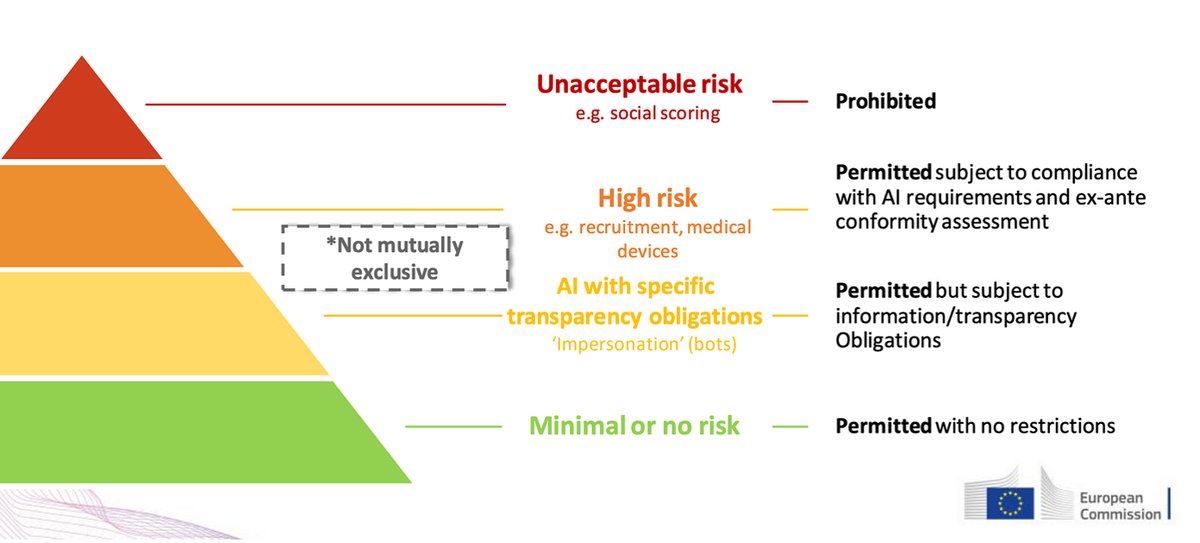
The original EU AI Act was adopted in 2024 as the world's first comprehensive legal framework for artificial intelligence. It introduced a risk-based classification system, prohibited certain AI practices, and established compliance obligations for high-risk AI systems, GPAI (General-Purpose AI) model providers, and deployers. But between its adoption and its phased implementation dates, it became clear that some provisions needed adjustment — some deadlines were unrealistic, some definitions too broad, and some enforcement mechanisms too weak.
Enter the EU AI Omnibus Regulation (EU) 2026/1744, adopted on July 8, 2026, and entering into force on July 27, 2026 [1]. Rather than a wholesale rewrite, the Omnibus is a targeted readjustment: it modifies specific provisions of the AI Act to refine scope, recalibrate timelines, and close gaps identified during the initial implementation phase. Law firms and advisors have noted that it represents "more of a readjustment of pace and scope rather than deregulation" [2].
Delayed High-Risk AI System Deadlines
The most immediately consequential changes in the Omnibus concern compliance deadlines for high-risk AI systems. The original AI Act established a phased timeline that many organizations found extremely tight. The Omnibus extends these deadlines:
- Annex III high-risk AI systems — covering employment, education, and essential services — now apply from December 2, 2027, a four-month extension from the original August 2, 2026 deadline.
- Annex I high-risk AI systems — covering products and safety components under EU harmonisation legislation — now apply from August 2, 2028, a one-year extension from the original August 2, 2027 deadline.
- Public authority high-risk systems — those operated by or on behalf of government bodies — must comply by August 2, 2030, a new dedicated deadline that recognizes the complexity of deploying compliant AI in public-sector contexts.
These extensions are not a relaxation of standards. They are an acknowledgment that building compliant high-risk AI systems — with proper risk management, technical documentation, human oversight, and quality management — requires more time than initially anticipated. Companies are advised to use the extended timelines to identify their AI applications, clarify risk classifications, and establish governance and compliance structures proactively rather than waiting until the last moment [2].
New Prohibitions on AI-Generated Harmful Content
The Omnibus introduces two new prohibited AI practices that take effect on December 2, 2026:
- Non-consensual intimate material: AI systems that generate deepfake nudity or sexual content depicting real individuals without their consent are now explicitly prohibited. This closes a gap in the original AI Act, which addressed deepfakes in the context of transparency obligations but did not explicitly ban the creation of non-consensual intimate imagery.
- Child sexual abuse material (CSAM): AI systems that generate CSAM are prohibited outright. This prohibition reinforces existing EU law on child exploitation and extends it explicitly to AI-generated content.
These prohibitions are absolute — there are no exceptions for law enforcement or national security. Organizations deploying generative AI systems must implement safeguards to prevent their models from producing such content, and providers of GPAI models must ensure that their systems cannot be used to circumvent these prohibitions.
Narrowed "Safety Component" Definition
One of the most consequential definitional changes in the Omnibus concerns the term "safety component." Under the original AI Act, an AI system could be classified as high-risk if it was a "safety component" of a product subject to EU harmonisation legislation. This broad definition risked pulling many AI systems into the high-risk category that were never intended to be regulated as such.
The Omnibus narrows this definition by explicitly excluding AI systems used solely for:
- User assistance
- Performance optimisation
- Automation
- Convenience
This means that an AI system embedded in a consumer product to improve user experience or automate routine tasks — but which does not play a role in the product's safety — is no longer automatically classified as high-risk. This narrowing is a significant relief for many technology companies, as it reduces the compliance burden for AI systems that, while embedded in regulated products, do not contribute to the product's safety function [1].
Machinery Sector: A New Sectoral Approach
The Omnibus also recalibrates how AI systems in the machinery sector are regulated. Under the original AI Act, machinery was listed in Section A of Annex I, meaning that AI systems in machinery products were automatically high-risk. The Omnibus moves the Machinery Regulation (EU) 2023/1230 from Section A to Section B of Annex I [1].
The practical effect: AI systems in machinery are no longer automatically high-risk. Instead, they are subject to a sectoral approach where the risk classification depends on the specific use case and the AI system's function within the machinery, rather than a blanket classification based on the machinery category alone. This change aligns with the principle that risk classification should follow function, not product category.
AI Literacy Requirement Softened
The original AI Act required providers and deployers of AI systems to "ensure" that their staff possessed sufficient AI literacy. The Omnibus changes this language from an obligation to "ensure" AI literacy to a requirement to "take measures to support the development of" AI literacy [1].
This is more than a linguistic shift. The original formulation created a compliance risk: could an organization ever truly "ensure" that all its staff had sufficient AI literacy? The new language is more realistic — it requires organizations to invest in AI literacy programs, training, and resources, but does not hold them to an impossibly absolute standard. For AI professors and educators, this change is directly relevant: it creates demand for AI literacy training programs while acknowledging that literacy is a continuous development process, not a binary threshold.
Article 4a: Processing Special Categories of Personal Data for Bias Detection
One of the most technically significant additions in the Omnibus is Article 4a, which permits the processing of special categories of personal data — racial or ethnic origin, political opinions, religious beliefs, genetic data, biometric data, health data, and sexual orientation — for the purpose of bias detection and correction in AI systems.
This might seem counterintuitive: why would a regulation designed to protect individuals allow the processing of their most sensitive data? The answer lies in the AI bias paradox. Without access to demographic data, it is impossible to measure whether an AI system discriminates against specific groups. You cannot fix a bias you cannot detect, and you cannot detect a bias if you are prohibited from collecting the data that would reveal it.
Article 4a resolves this by allowing such processing, but under strict safeguards [1]:
- Pseudonymisation: Data must be pseudonymised before processing, so that individuals cannot be directly identified.
- Data deletion: Personal data processed for bias detection must be deleted once the bias assessment is complete — it cannot be retained indefinitely.
- No third-party transfers: The data cannot be transferred to third parties, preventing commercial exploitation of sensitive demographic data under the guise of compliance.
For AI researchers working on fairness and bias — including those in Morocco's growing AI research community — this provision creates a clear legal pathway for conducting bias audits that were previously hampered by GDPR restrictions on processing special categories of data. However, the strict safeguards mean that organizations must build bias detection pipelines that are technically robust and legally compliant from the ground up, not retrofitted after the fact.
SME and Small Mid-Cap Benefits
The Omnibus introduces targeted relief for small and medium-sized enterprises (SMEs) and small mid-cap companies (SMCs):
- Simplified technical documentation: SMEs and SMCs can use streamlined documentation templates, reducing the compliance burden without lowering the substantive safety requirements.
- Simplified quality management: Smaller organizations can adopt lighter quality management systems, reflecting the reality that a startup with 15 employees cannot maintain the same documentation infrastructure as a multinational corporation.
- Cap on fines: SMEs and SMCs benefit from a cap on administrative fines, ensuring that a compliance failure does not become an existential financial threat.
These provisions recognize that one-size-fits-all compliance requirements risk crushing smaller organizations that lack the legal and technical teams of large corporations. The goal is proportionality: the same safety outcomes, achieved through appropriately scaled processes [1].
EU AI Office: Enforcement Powers Strengthened
As of August 2, 2026, the EU AI Office formally exercises its investigative and enforcement powers over GPAI model providers [3]. The Omnibus strengthens these powers, granting the AI Office exclusive competence over:
- AI systems built on GPAI models
- AI systems embedded in very large online platforms (VLOPs) and very large online search engines (VLOSEs)
The AI Office's powers include [3]:
- Requesting information and documentation from GPAI model providers
- Conducting inspections, including on-site evaluations
- Requiring corrective measures when non-compliance is identified
- Imposing fines of up to €15 million or 3% of worldwide annual turnover
- Ordering restrictions, withdrawals, or recalls of non-compliant models
This is a significant escalation. The original AI Act established the AI Office but left some questions about the scope and reach of its enforcement powers. The Omnibus resolves those ambiguities by giving the Office clear, exclusive jurisdiction over the most impactful AI systems — those built on general-purpose models and those deployed at the scale of the largest online platforms. For GPAI providers operating in or serving the European market, this means that a single regulator now has the authority to investigate, penalize, and order corrective action across all member states.
Transparency Obligations: Effective August 2, 2026
While the high-risk system deadlines have been extended, the transparency obligations under the AI Act took effect on August 2, 2026, as originally scheduled [4]. These obligations apply now and represent the most immediately relevant compliance requirement for most organizations deploying AI:
- AI interaction disclosure: Users must be informed when they are interacting with an AI system. If a user is chatting with a chatbot, engaging with an AI assistant, or receiving AI-generated recommendations, this must be disclosed clearly and transparently.
- Synthetic content marking: AI-generated audio, image, video, or text content must be marked in a machine-readable format and must be detectable as artificially generated. This applies to generative AI systems and is not limited to deepfakes — all AI-generated content must carry a machine-readable provenance indicator.
- Deepfake disclosure: Deployers of AI systems that generate or manipulate content to resemble real persons, objects, or events must disclose that the content has been artificially generated or manipulated. This obligation sits alongside the new prohibition on non-consensual intimate deepfakes — even where deepfakes are legal (e.g., in film, satire, or art), disclosure is mandatory.
- Emotion recognition and biometric categorisation: Individuals must be informed when they are exposed to systems that recognise emotions or categorise them by biometric characteristics.
Violations of these transparency obligations can result in fines of up to €15 million or 3% of global annual turnover [4]. The European Commission has published comprehensive Implementation Guidance for the EU AI Act (July 2026), covering scope and definitions, free and open-source AI exemptions, substantial modifications, high-risk classification, GPAI model obligations, risk management, third-party components, value chain cooperation, and transparency obligations [5].
What This Means for AI Developers Today
If your organization deploys chatbots, generative AI tools, deepfake detection systems, or emotion recognition technology to EU users, you must now comply with transparency obligations. This means implementing disclosure mechanisms, adding machine-readable content provenance markers, and establishing governance processes for synthetic content. The European Commission's Implementation Guidance provides a detailed compliance roadmap [5].
Extended Transition for Synthetic Content Marking
The Omnibus also addresses a practical concern raised by providers of generative AI systems that were already on the market before the AI Act's transparency requirements took effect. Providers of generative AI systems placed on the market before August 2, 2026 have until December 2, 2026 to comply with Article 50(2) marking requirements [1]. This four-month transition period gives existing providers time to implement machine-readable content provenance markers without needing to withdraw their products from the market.
Industry Response: Readjustment, Not Deregulation
Legal and industry analysts have characterized the Omnibus as a readjustment of pace and scope rather than deregulation [2]. The core framework remains intact: prohibited practices are still prohibited, high-risk systems still face stringent requirements, and GPAI providers still have specific obligations. What has changed is the timeline — giving organizations more breathing room to achieve compliance — and the scope — narrowing some definitions that were previously too broad.
The advice from legal practitioners is consistent: use the extended timelines wisely. Organizations should not treat the deadline extensions as an excuse to delay action. Instead, they should use the additional time to:
- Identify all AI systems in their organization, including those developed in-house and those procured from third parties
- Clarify risk classifications under the narrowed definitions, particularly for systems previously considered high-risk that may now fall outside that category
- Establish governance and compliance structures — including AI literacy programs, risk management processes, and documentation systems — before deadlines become emergencies
| Aspect | Original AI Act | Omnibus 2026 |
|---|---|---|
| Annex III high-risk deadline | August 2, 2026 | December 2, 2027 |
| Annex I high-risk deadline | August 2, 2027 | August 2, 2028 |
| Public authority AI | Not specified | August 2, 2030 |
| Deepfake/CSAM prohibition | Not included | December 2, 2026 |
| AI literacy | "Ensure" literacy | "Support development of" literacy |
| Bias detection data | Restricted | Article 4a permits (with safeguards) |
| SME documentation | Full requirement | Simplified |
What This Means for AI Professionals in Morocco
The EU AI Omnibus is not a purely European concern. For AI professionals in Morocco, its implications are substantial and direct:
The EU-Morocco Digital Partnership
In April 2026, Morocco and the European Union signed a series of digital partnership agreements that include the Medusa fiber optic cable project and the establishment of an AI factory in Rabat [6]. This partnership means that Morocco's AI ecosystem — including the Jazari ROOT institute's sovereign data center and AI models — will increasingly need to align with EU AI Act requirements when serving European markets or processing EU citizens' data.
Extraterritorial Reach
The EU AI Act has extraterritorial scope: AI systems developed outside the EU but deployed within it — or whose outputs are used within it — fall under its jurisdiction. For Moroccan AI companies and research labs developing models that may be used by European clients, compliance with EU AI Act requirements is not optional. The Omnibus's clarification of high-risk classifications and transparency obligations makes this compliance calculus more concrete.
Research Implications
For AI researchers in Morocco, the Omnibus creates both obligations and opportunities:
- Obligations: Research models deployed in the EU must comply with transparency and disclosure requirements. Computer vision systems used in autonomous driving or surveillance — areas where Moroccan researchers are active — may fall under high-risk classifications.
- Opportunities: Article 4a's provision for processing special categories of data for bias detection opens new research avenues. The Jazari ROOT data factory's curation of Moroccan datasets could include bias detection pipelines that leverage this provision.
- Alignment: The Maroc IA 2030 strategy's emphasis on citizen trust and ethical AI governance aligns with the EU AI Act's risk-based approach, creating a natural regulatory convergence that simplifies cross-border compliance.
Teaching the Next Generation
The softening of the AI literacy requirement from "ensure" to "take measures to support the development of" does not diminish its importance — it increases it. AI professors in Morocco now need to prepare students not just for the technical challenges of building AI systems, but for the regulatory, ethical, and governance challenges of deploying them responsibly. AI literacy is no longer a niche concern; it is a professional competency required across every organization that deploys AI.
Compliance Roadmap: What AI Professionals Should Do Now
Based on the Omnibus's provisions and the European Commission's Implementation Guidance, here is a practical compliance roadmap:
- Conduct an AI inventory: Identify every AI system your organization develops, deploys, or uses. This includes chatbots, recommendation engines, computer vision systems, generative AI tools, and any automated decision-making system.
- Classify each system: Apply the Omnibus's narrowed definitions. Is the system prohibited? High-risk (Annex I or Annex III)? Transparency-obligated? GPAI? Or low-risk/limited-risk? The narrowed "safety component" definition may move some systems out of the high-risk category.
- Audit transparency compliance: As of August 2, 2026, all AI interaction disclosure, synthetic content marking, deepfake disclosure, and emotion recognition/biometric notification requirements are in force. Verify that your systems comply.
- Implement AI literacy programs: Take measures to support the development of AI literacy across your organization. Document these measures — they are now a legal requirement, not a nice-to-have.
- Prepare for high-risk compliance: Use the extended deadlines (December 2027 for Annex III, August 2028 for Annex I, August 2030 for public authority systems) to build robust risk management, technical documentation, and quality management systems. Do not wait until the deadline.
- Review bias detection capabilities: Article 4a creates a legal pathway for processing special categories of personal data for bias detection. Evaluate whether your organization needs to build or enhance bias detection pipelines under this provision.
- Monitor AI Office enforcement: The AI Office is now actively exercising its powers. Track its decisions, guidance, and enforcement actions to stay ahead of regulatory expectations.
Sources & References
- EUR-Lex — Regulation (EU) 2026/1744 (EU AI Omnibus Regulation)
- Taylor Wessing — “EU AI Omnibus Regulation: A Readjustment of Pace and Scope”
- Wilson Sonsini — “EU AI Act Enforcement Phase Begins”
- European Commission — “Safer and More Transparent AI” (August 2, 2026)
- European Commission — “Implementation Guidance for the EU AI Act” (July 2026)
- African Business — “Morocco and EU Sign Deals to Become Third Voice in Global AI”
Navigating AI Regulation in Your Organization?
Dr. Razzok's expertise in AI research and governance can help your team understand compliance obligations, assess risk classifications, and build responsible AI systems. Reach out to discuss consulting, training, or research collaboration.
Get in Touch →