AI Patrol Vehicles in Morocco: How Amane and Madar Connect Computer Vision Research to Smart Policing
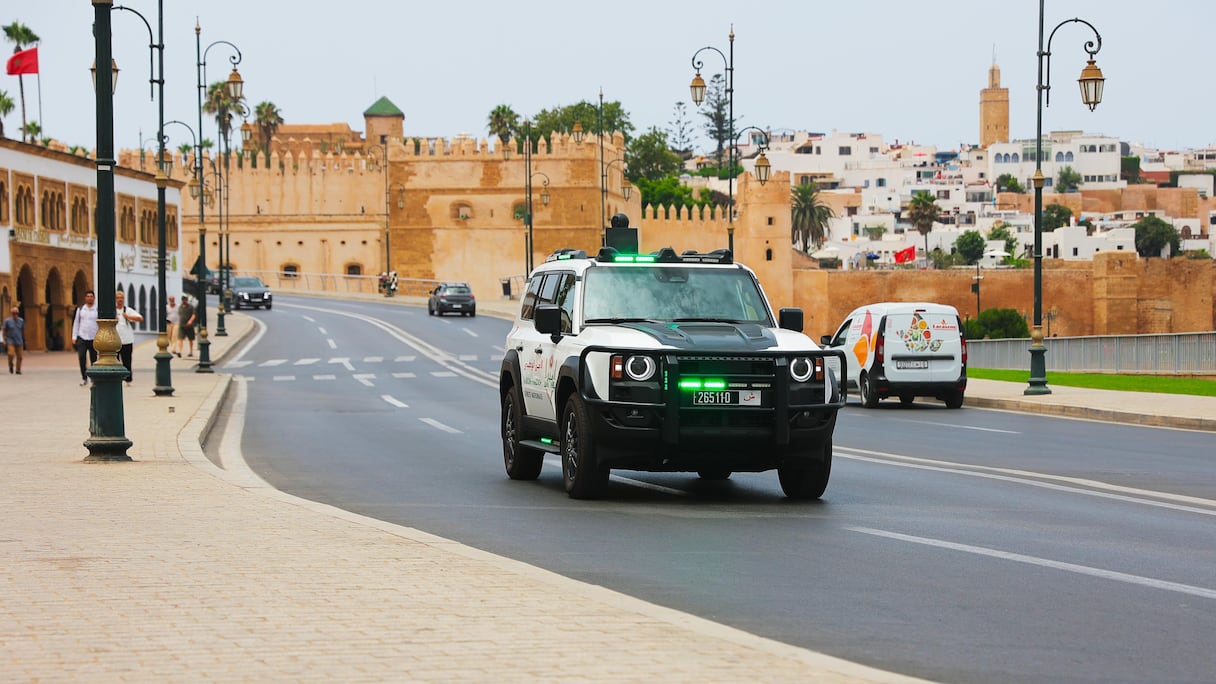
In July 2026, Morocco's General Directorate of National Security (DGSN) rolled out two AI-powered patrol vehicles on the streets of Rabat — marking a significant milestone for both national security and the country's growing artificial intelligence ecosystem. Named Amane (Arabic for "security") and Madar (Arabic for "surrounding" or "patrol"), these Moroccan-engineered vehicles bring computer vision, automatic license plate recognition, and facial recognition directly into urban policing. For researchers like Dr. Mohammed Razzok, whose Ph.D. work centers on real-time pedestrian detection and object tracking, the deployment represents something larger: the moment when Morocco transitions from producing AI research to deploying AI systems at scale.
| Value | Metric |
|---|---|
| 360° | Camera coverage per vehicle |
| 11 | Cameras per vehicle |
| 90–95% | License plate recognition accuracy |
| 16 hrs | Continuous operation (Amane vehicle) |
| 2030 | FIFA World Cup co-hosting target |
What Are Amane and Madar?
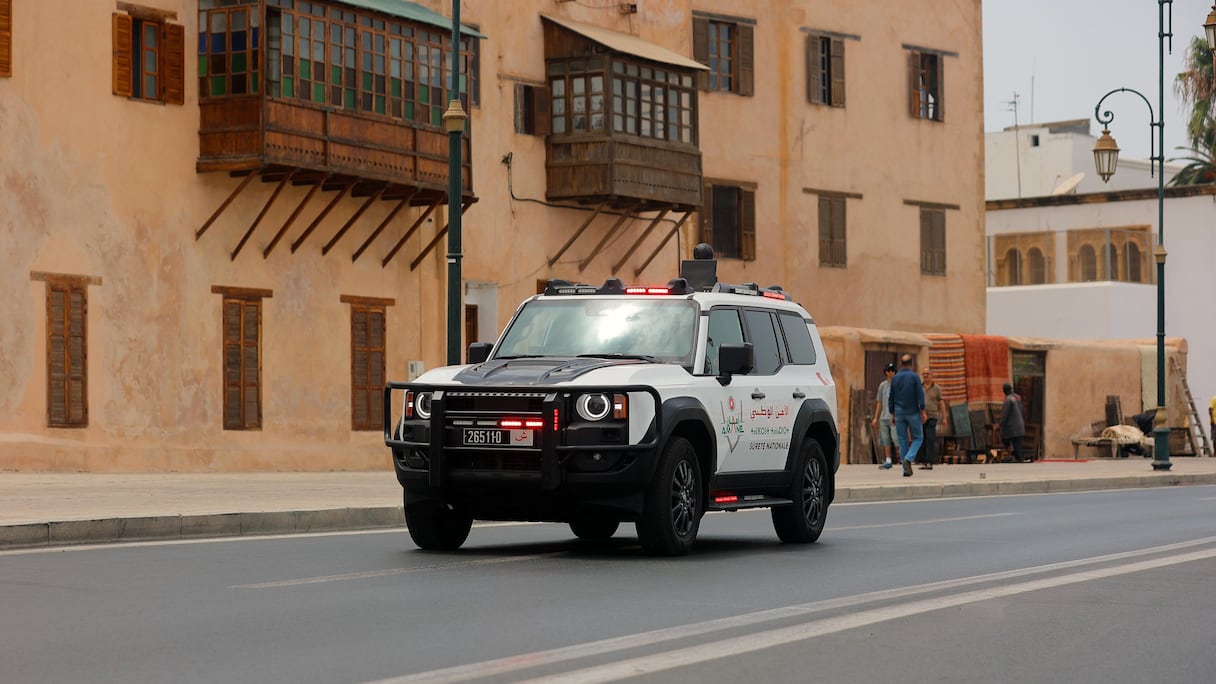
Amane and Madar are purpose-built AI patrol vehicles designed and manufactured entirely in Morocco. Deployed by the DGSN in July 2026, they currently operate in Rabat, with expansion plans for Casablanca and Tangier. Their names carry deliberate symbolism — Amane meaning "security" in Arabic, and Madar meaning "surrounding" or "patrol" — signaling that these are not imported technology but Moroccan solutions for Moroccan challenges.
The vehicles come equipped with a suite of AI-driven capabilities:
- 360-degree cameras providing full situational awareness around the vehicle
- Automatic license plate recognition (ALPR) that identifies vehicles in real time, cross-referencing DGSN databases
- Facial recognition capability for identifying persons of interest in public spaces
- Real-time connectivity to DGSN command centers, enabling instantaneous data transmission
- GPS tracking with direct access to the DGSN central database
- 3D-printed emergency lighting, developed using additive manufacturing technology — a detail that underscores the vehicle's Moroccan engineering pedigree
These are not concept vehicles or prototypes. They are operational units patrolling Moroccan streets, processing visual data in real time, and feeding results back to command centers. The deployment is a clear signal that Morocco's investment in AI is moving from policy papers to pavement.
The Computer Vision Behind the Vehicles
From a technical perspective, the capabilities of Amane and Madar rest on three pillars of computer vision that are directly connected to active research areas — including the work of Dr. Mohammed Razzok at FSTM Mohammedia.
License Plate Recognition and Object Detection
Automatic license plate recognition requires a pipeline that mirrors the object detection systems studied in computer vision research. The process involves:
- Detection: Scanning the video frame to locate license plates — this uses object detection architectures similar to YOLOv5, the same model family Dr. Razzok employs in his pedestrian detection research
- Segmentation: Isolating the plate region from the rest of the image
- Recognition: Using optical character recognition (OCR) to read the characters, often enhanced by recurrent neural networks or transformer-based models
- Database matching: Comparing recognized plates against the DGSN central database in real time
The challenge is not merely accuracy — it is real-time accuracy under variable conditions. License plates must be read at speed, at distance, in poor lighting, and sometimes at oblique angles. This is precisely the kind of environmental robustness that conditional GAN-based data augmentation and weather-adaptive detection models aim to solve.
Facial Recognition and Real-Time Video Analysis
Facial recognition in a mobile, outdoor environment presents even greater challenges. Unlike controlled-access systems where lighting and pose are predictable, a patrol vehicle must identify faces from 360-degree cameras capturing people in motion, at varying distances, under changing illumination. The technical pipeline involves face detection (again, an object detection problem), alignment, feature extraction using deep neural networks, and comparison against watchlists in the DGSN database.
This is real-time video analysis at its most demanding — the system must process multiple video streams simultaneously, maintain performance across weather conditions, and deliver results with low enough latency to be operationally useful. The same principles of multi-object tracking that Dr. Razzok's Deep-SORT research addresses — maintaining identity across frames, handling occlusion, and associating detections over time — are foundational to making facial recognition work in a mobile patrol context.
Pedestrian Detection for Road Safety
Beyond law enforcement, the vehicles' 360-degree camera systems necessarily handle pedestrian detection — a core safety requirement for any AI-equipped vehicle operating in urban environments. This is where the connection to Dr. Razzok's research is most direct. His Ph.D. work on pedestrian detection using YOLOv5 and Deep-SORT addresses the exact problem these vehicles face: detecting people in real time, under variable conditions, and tracking them across frames to predict movement.
Research Connection: From Lab to Street
The AI capabilities in Amane and Madar — license plate recognition, facial identification, and pedestrian tracking — all rely on the same computer vision foundations that Dr. Razzok's research has advanced. His work on YOLOv5-based detection, Deep-SORT tracking, and conditional GANs for weather robustness represents the kind of applied research that makes deployments like these technically feasible. Read the Deep-SORT + YOLOv5 paper →
Morocco's AI Infrastructure: From Research to Deployment
The Amane and Madar vehicles did not emerge in a vacuum. They are part of a broader national strategy to position Morocco as an AI leader in Africa and the MENA region.
Maroc IA 2030: The National Strategy
Launched in January 2026, Maroc IA 2030 is Morocco's national artificial intelligence strategy, spearheaded by Minister Amal El Fallah Seghrouchni. The strategy encompasses education, research, industry, and governance — with the explicit goal of making AI a driver of economic development and public service transformation. Key elements include:
- Establishing four Jazari institutes dedicated to AI specialization
- Digitizing 660 government services on the Idarati platform
- Developing AI talent pipelines from universities to industry
- Creating regulatory frameworks for responsible AI deployment
The Four Jazari Institutes
Central to Maroc IA 2030 are four Jazari institutes, each focused on a different domain of AI application:
- Jazari ROOT: Focused on fundamental AI research — algorithms, architectures, and theoretical foundations
- Jazari Education: Developing AI-powered tools for personalized learning and educational innovation
- Jazari Industry X.0: Driving AI adoption in manufacturing, logistics, and industrial automation
- Jazari Smart City: Applying AI to urban management, transportation, public safety, and civic services
The Jazari Smart City institute is the most directly relevant to the Amane and Madar deployment. Its mission — applying AI to urban safety and management — is exactly what these patrol vehicles embody: computer vision algorithms operating in public spaces to enhance security and urban governance.
This institutional infrastructure ensures that deployments like Amane and Madar are not isolated experiments but components of a systematic national strategy that connects research, training, and deployment into a coherent pipeline.
The 2030 FIFA World Cup Catalyst
The rollout of Amane and Madar is not happening in isolation from Morocco's broader international commitments. Morocco will co-host the 2030 FIFA World Cup alongside Spain and Portugal, and the security and logistical demands of hosting the world's largest sporting event are immense.
AI-powered patrol vehicles are part of a comprehensive security and logistics preparation that includes:
- Enhanced urban surveillance across host cities
- Real-time crowd monitoring and anomaly detection at stadiums and fan zones
- Automated identification systems for border control and event security
- Intelligent traffic management to handle the surge in visitors
The World Cup timeline creates a natural deadline that is accelerating Morocco's AI deployment schedule. What might have taken years to implement is being compressed into a focused rollout — making Amane and Madar not just technological achievements but logistical ones as well.
3D-Printed Emergency Lighting: A Symbol of Moroccan Engineering
One of the most distinctive features of Amane and Madar is their 3D-printed emergency lighting. While this might seem like a minor detail, it carries significant meaning. The use of additive manufacturing for a critical vehicle component signals several things:
- Local engineering capability: Morocco can design, iterate, and produce specialized components domestically rather than relying on imported parts
- Rapid prototyping culture: The ability to 3D-print functional components implies an ecosystem that values fast iteration and in-house innovation
- Cost efficiency: 3D printing reduces the cost of small-batch, specialized components — important when producing limited numbers of prototype vehicles
- Engineering maturity: Choosing to use 3D printing for a visible, operational component (rather than just internal brackets) demonstrates confidence in the technology's reliability
This detail resonates with the broader theme: Amane and Madar are Moroccan-engineered, not just Moroccan-deployed. The design, the manufacturing choices, and the AI capabilities reflect domestic engineering expertise.
Connecting the Dots: Research, Policy, and Reality
For Dr. Razzok and other AI researchers in Morocco, the deployment of Amane and Madar represents a convergence point. The AI research ecosystem in Morocco — spanning FSTM Mohammedia, ENSIAS Rabat, and emerging programs across the country — produces the fundamental computer vision research that makes systems like these possible. The Maroc IA 2030 strategy provides the policy framework and institutional support. And deployments like Amane and Madar prove that the pipeline works: from research question to working system.
Consider the specific technical challenges that Dr. Razzok's research addresses and how they map to the vehicles' capabilities:
| Research Area | Dr. Razzok's Contribution | Vehicle Application |
|---|---|---|
| Real-time object detection | YOLOv5-based pedestrian detection pipeline | License plate and face detection from 360-degree cameras |
| Multi-object tracking | Deep-SORT with novel data association metrics | Pedestrian and vehicle tracking across camera feeds |
| Weather robustness | Conditional GANs for adverse-condition training | Reliable detection in rain, fog, and low light |
| Edge deployment | Optimized detection for real-time inference | On-board processing with real-time command center link |
This alignment is not coincidental. The fundamental computer vision research that enables a patrol vehicle to recognize a license plate or track a pedestrian is the same research being conducted in Moroccan universities. The gap between the lab and the street is narrowing — and that is precisely what Maroc IA 2030 is designed to accelerate.
Ethical Considerations and the Path Forward
The deployment of AI-powered surveillance vehicles inevitably raises ethical questions. Facial recognition in public spaces, real-time tracking of individuals, and centralized databases of citizen information all require robust governance frameworks. Morocco's Maroc IA 2030 strategy includes regulatory components, but the practical implementation will require ongoing attention to:
- Data privacy: How facial recognition data is collected, stored, and retained
- Algorithmic bias: Ensuring that detection systems perform equitably across demographics
- Transparency: Public understanding of what AI patrol vehicles can and cannot do
- Oversight: Independent mechanisms to audit and review AI-assisted policing decisions
These are not obstacles to deployment — they are essential complements to it. The countries that will lead in AI are those that deploy responsibly, not just rapidly. Morocco's establishment of dedicated AI institutions through the Jazari framework creates a natural home for this kind of interdisciplinary work, where technologists, legal scholars, and policymakers can collaborate on governance alongside engineering.
What This Means for AI Research in Morocco
The deployment of Amane and Madar is a proof point — not just that Morocco can deploy AI, but that the research-to-deployment pipeline is active. For students considering AI research in Morocco, for international collaborators evaluating Moroccan institutions, and for policymakers allocating resources, the message is clear: Moroccan AI research produces deployable outcomes.
This has practical implications:
- For students: There are now tangible career paths from studying computer vision to working on nationally deployed AI systems
- For researchers: The existence of operational AI systems creates demand for improved algorithms, better robustness, and new capabilities — generating real research questions with real impact
- For international partners: Morocco is no longer just a source of AI talent and publications; it is a deployer of AI systems, making it a more compelling partner for joint research and development
- For the Jazari institutes: Amane and Madar validate the Smart City institute's mission and provide case studies for education and research programs
The trajectory from pedestrian detection research in a university lab to AI-powered vehicles on Moroccan streets is exactly the kind of ecosystem development that the AI research community in Morocco has been working toward. Amane and Madar are not the end point — they are the beginning of a new phase where Moroccan AI research meets Moroccan reality.
Want to Collaborate on Computer Vision Research?
Dr. Razzok's research on pedestrian detection, object tracking, and real-time computer vision directly connects to the technologies powering Morocco's AI infrastructure. Reach out to discuss research partnerships, academic supervision, or consulting on smart city AI systems.
Get in Touch →